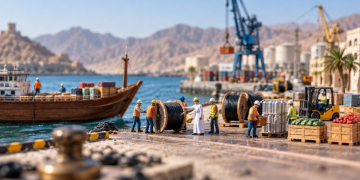
Al Jasser made the proposal in Istanbul while opening the 42nd ministerial session of COMCEC, the OIC’s standing committee for economic and commercial cooperation. He called for wider access to trade finance and stronger risk-sharing tools, particularly for small and medium-sized enterprises.
The timing fits Gulf export strategies directly. Saudi Arabia and the UAE, alongside other regional economies, are building out logistics and manufacturing capacity, together with digital infrastructure, under national diversification plans. Stronger trade guarantees could help exporters reach new markets while cutting financing barriers.
Financing must connect with productive capacity
Al Jasser was direct: trade finance alone cannot raise export competitiveness. Companies also need efficient logistics, stronger production capacity, higher quality standards and easier access to regional markets.
That approach places infrastructure beside working capital. The IsDB Group wants banks and development agencies to identify bankable export opportunities, then connect guarantees with transport, energy, digital infrastructure and strategic value chains.
The Group’s deployment capacity is substantial. Net approvals reached nearly US$18B in the first nine months of 2026, according to IsDB figures, more than 9% above the same period in 2025.
Meanwhile, the International Islamic Trade Finance Corporation approved about US$11B during that same period. Nearly US$9B supported trade within OIC countries, per IsDB data.
The Islamic Corporation for the Insurance of Investment and Export Credit provided coverage for almost US$16B in business. More than US$6B supported intra-OIC trade and investment, according to IsDB figures for January to September 2026.
IsDB Group entity activity January to September 2026
| IsDB Group net approvals | ~US$18B | |
| ITFC approvals | ~US$11B | |
| ICIEC coverage | ~US$16B |
Source: IsDB figures
| IsDB Group Entity | Approvals / Coverage (Jan–Sep 2026) | Intra-OIC Share |
|---|---|---|
| IsDB Group (net approvals) | ~US$18B | — |
| International Islamic Trade Finance Corporation | ~US$11B | ~US$9B |
| Islamic Corporation for Insurance of Investment and Export Credit | ~US$16B | >US$6B |
The numbers point to a growing role for risk mitigation. Insurance and guarantees help commercial lenders support exporters across markets with different currencies, regulations and credit conditions.
What does this mean for Gulf investors?
No new transaction was announced in Istanbul. Instead, Al Jasser set out a coordination agenda for institutions, governments and private lenders. The strategic intent is clear: trade finance becomes more valuable when it is tied to investable export capacity.
For Gulf investors, the opportunity lies in projects that combine trade flows with physical and digital infrastructure. Export corridors need ports, power, data links and reliable payment channels. They also need financing structures that share risk across public and private balance sheets.
By FurtherArabia’s reading of the numbers, the Group is positioning trade finance as part of a wider export platform. That platform joins lending, guarantees, insurance and infrastructure support. IsDB Group cumulative financing reached US$227B by end-September 2026, per Group data.
The IsDB–Pakistan partnership illustrates the model: approximately US$17B in cumulative financing, including US$12.8B in completed operations and US$4.2B in ongoing ones, under the Member Country Partnership Strategy 2026–2030. As the IMEC corridor analysis showed, Gulf economies gain most when trade infrastructure links physical routes with accessible financing.
Investors will watch whether the proposed coordination produces bankable projects, larger intra-OIC trade flows and stronger private-sector participation in the quarters ahead.
What it means for the Gulf
The IsDB Group’s near-US$18B in net approvals during the first nine months of 2026 arrives as GCC inward FDI reached a decade high of US$99B in 2025, signalling that Gulf economies are attracting capital at scale. Converting that into durable export competitiveness still requires the risk-sharing and logistics support Al Jasser outlined in Istanbul.
Gulf-based lenders and sovereign vehicles already active in multilateral co-financing (as seen in the Saudi Fund for Development’s US$471M in loans across 11 nations) are well placed to anchor the guarantee and insurance structures the IsDB Group is now coordinating, particularly along OIC trade corridors where infrastructure gaps remain the binding constraint.
Quick answers
The IsDB Group recorded net approvals of nearly US$18B in January to September 2026, according to Group figures — more than 9% above the same period in 2025.
The International Islamic Trade Finance Corporation approved approximately US$11B in the first nine months of 2026, of which nearly US$9B supported trade within OIC member countries, per IsDB data.
IsDB Group cumulative financing reached US$227B by end-September 2026, according to Group figures, reflecting decades of lending, guarantees and insurance across member states.